

2821

Adafruit
485-2821
2821

Mfr.:

Description:
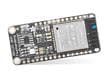
WiFi Development Tools - 802.11 Adafruit Feather HUZZAH with ESP8266 - Loose Headers

In Stock: 83

Stock:
83 Can Dispatch Immediately
Factory Lead Time:
1 Week Estimated factory production time for quantities greater than shown.
Minimum: 1   Multiples: 1
Unit Price:
Rp-
Ext. Price:
Rp-
Est. Tariff:

Pricing (IDR)

Qty. Unit Price
Ext. Price
Rp274.273 Rp274.273

Product Attribute Attribute Value Select Attribute
Adafruit
Product Category: WiFi Development Tools - 802.11
RoHS:  
Development Boards
ESP8266
802.11 b/g/n
2.4 GHz
3.3 V
WiFi
Brand: Adafruit
Description/Function: ESP8226 WiFi development board
Dimensions: 51 mm x 23 mm x 8 mm
Interface Type: I2C, SPI, USB
Modulation Technique: CCK, DSSS, OFDM
Product Type: WiFi Development Tools
Series: Feather
Factory Pack Quantity: 1
Subcategory: Development Tools
Unit Weight: 8,500 g
Products found:
To show similar products, select at least one checkbox
Select at least one checkbox above to show similar products in this category.
Attributes selected: 0

CNHTS:
8543709990
CAHTS:
8542390000
USHTS:
8471500150
JPHTS:
854239099
TARIC:
8471500000
MXHTS:
8542399901
ECCN:
5A992.C

Feather Boards

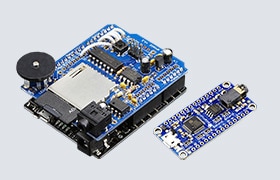
Adafruit Feather is a complete line of standalone and stackable development boards. The Adafruit Feather product line includes basic boards, data loggers, BLE and Arduino compatible boards, and HUZZAH ESP8266 WiFi development boards. Flexible and portable, the Feather boards are powered by lipo batteries for on-the-go use or by micro-USB plugs for stationary projects. To support portable projects, the Feather Boards include a connector for Adafruit 3.7V lithium polymer batteries and built-in battery charging.

Feather HUZZAH with ESP8266 Wi-Fi®

Adafruit Feather HUZZAH with ESP8266 Wi-Fi® is designed as an all-in-one ESP8266 Wi-Fi development board with built-in USB and battery charging. The board features the ESP8266 Wi-Fi microcontroller clocked at 80MHz and at 3.3V logic. The ESP8266 includes a Tensilica chip core and a full WiFi stack. Designers can program the microcontroller using the Arduino IDE for an easy-to-run Internet of Things core.