CIMON Says: Design Lessons in Space
By Traci Browne and Paul Golata for Mouser Electronics
Of the more than 225 visitors to the International Space Station (ISS) in the past 20 years, June 2018 marked the
first time one of those visitors was a free-flying, autonomous service robot. CIMON, or as it is more formally
known, the Crew Interactive MObile CompanioN, is a 320mm in diameter, 5kg, a robotic brain that can
speak, hear, see, and understand. CIMON is an artificial intelligence (AI) assistant in the form of a plastic
spherical head with no body.
In fact, CIMON’s design was reportedly inspired by the Professor Simon Wright’s character (a flying
brain) in the 1978 cartoon series, Captain Future. Much like the professor-aided Captain Future in the
fictional world, CIMON was responsible for assisting astronaut Alexander Gerst (1976–) in the Columbus
laboratory module in the ISS.
CIMON, developed and built by Airbus on behalf of the German Aerospace Center (Deutsches Zentrum für Luft-
und Raumfahrt e.V., abbreviated DLR), was assigned to assist Gerst with three different tasks, making this
service robot a collaborative robot as well. The three tasks involved solving a Rubik’s cube puzzle,
conducting experiments with crystals, and carrying out a medical experiment which CIMON would film. CIMON could also
serve as a complex database of all necessary information about operation and repair procedures for experiments and
equipment on the ISS, allowing astronauts to have their hands free while working. If the crew wanted to capture
video for documentation purposes, CIMON could handle that as well.
Designing for Microgravity
While the design may have been inspired by science fiction, the spherical shape has a more practical application in
a microgravity environment (Figure 1). Till Eisenberg, project manager at Airbus Friedrichshafen,
said that the primary challenge was to create a robot that would be accepted by the astronauts.
“Everything in the Space Station is rectangular, and it is a very technical environment. We wanted to have a
calm point of focus,” said Eisenberg.
Figure 1: This is CIMON at the European Astronaut Center in Cologne, Germany.
(Source: DLR/T. Bourry/ESA)
CIMON's service as a calm point of focus, along with its ability to make the astronaut's job more manageable, is
important. Judith-Irina Buchheim, a medical researcher at the Ludwig-Maximilian University Hospital in Munich,
thinks that the assistance CIMON provides astronauts will reduce their exposure to stress, which researchers believe
has an impact on the human immune system. The simple, spherical shape contrasts to the boxy, technical environment
of the ISS, but there are other advantages as well.
Because CIMON was the first free-flyer to operate on the ISS, safety was a significant concern. Typically, the rule
for a microgravity environment is that everything must be strapped down to prevent objects from floating around and
getting into things and places they should not. Eisenberg said that sharp edges or corners would be a hazard as it
floats around the ISS bumping against walls, equipment, or the astronauts themselves.
Even if CIMON’s shape meant it would not hurt anyone, colliding with astronauts trying to work in an
already-cramped space could quickly become annoying. To avoid that situation CIMON is equipped with 12 ultrasonic sensors that enable it to detect obstacles and be aware of
incoming objects. These sensors measure the distance from the obstacle or astronaut to CIMON.
Fourteen internal fans allow CIMON to move and rotate in all spatial directions. While CIMON is on the move, a dual
3D camera sensor collects information about the depth and relation from one feature to another and builds a map
based on Simultaneous Localization and Mapping (SLAM) algorithms. A frontal video camera and face detection software
would focus on the eyes of Gerst, allowing CIMON to orient itself to simulate eye-contact.
If Gerst wanted to get CIMON’s attention, when it was otherwise occupied, say looking out the window and
enjoying the view, he could look in the robot’s direction and speak to CIMON. An array of microphones could
detect the arrival direction of Gerst’s voice, and CIMON would orient himself until the speaker was in the
field of view of the camera, at which point the eye gazing could happen.
For their final test, Eisenberg and CIMON boarded the Airbus A300 Zero-G for a parabolic flight test. Eisenberg
described the flight as “a great experience” and “something everyone should do.” The plane
flies up and down at 45° angles. The decent is where microgravity occurs, and this phase lasts about 20 seconds.
A typical parabolic flight test will experience this about 30 times per flight.
Designing the Face and Voice
The ability to maintain eye contact and communicate are essential skills for an assistant, so the service bot
needed a face. In CIMON’s case, the face is a simple line drawing displayed on a front-facing screen
(Figure 2). As mentioned earlier, acceptance by the astronauts was one of the engineers’
primary challenges. The team invited Gerst to be a part of the design phase to ensure CIMON was an assistant with
which the astronaut would work. Gerst was presented with several voices and faces to choose from, ensuring he would
be happy with the result, while providing him with a sense of ownership and familiarity when he and the robot
finally met on the ISS.
Figure 2: This is a composite image of CIMON on the ISS. (Source:
DLR/T.Bourry/ESA)
An integral part of CIMON’s ability to assist astronauts is the IBM Watson AI system, which provides the core
speech comprehension element. When someone speaks a language to a robot like CIMON with an AI system, the
robot’s job is to identify intent. When a message arrives via audio stream, it then undergoes translation into
written language so that the system can understand and interpret its meaning. Once the identification of intent is
complete, the AI system generates an answer based on several keywords in one sentence.
Eisenberg said that the AI will always understand words that align with its training. That is why a system that is
working fine with a small project group can react in an unexpected way when a new person tries to interact with it.
Aware of this potential problem, the team had Gerst interact with the AI for two sessions. Not only did those
sessions make the AI familiar with Gerst, but it acclimated him to working with AI. Much like aeronautic radio
chatter, the crew on the ISS has created a specific way of talking, and they use keywords that have well-defined
intentions, so CIMON should not have any trouble interacting with other crew members in the future.
Designing Interconnect Systems
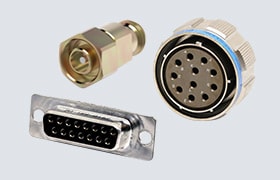
CIMON depends on a great deal of space-grade connector and
cabling technology to provide high-reliability operation in such an extreme environment. Space-grade interconnect
technologies call for extensive qualification to meet high-performance standards established by governing
authorities in order to ensure compliance where failure would lead to catastrophic damage or losses. Reliability is
of utmost priority to ensure the success of the mission, so special materials are often warranted to ensure
performance. While space itself is extremely cold, internal heating of components may exist that have limited
conventional cooling, exposing connectors and cabling to potentially extremely wide and dynamically modulating
temperature extremes. Small size and low mass are important to ensure that things fit into the limited available
space and that mission objectives for overall payload size and space are maintained. Retention forces and mating
connections must be ensured so that under extreme conditions connection failures are not realized.
Amphenol Aerospace is the world leader in designing,
manufacturing, and supplying high-performance interconnect systems for military, commercial air, and industrial
markets. Amphenol Aerospace 2M
Micro-Miniature Connectors are designed for interconnect applications requiring high performance. These 2M
Micro-Miniature Connectors are 71 percent lighter, 52 percent smaller, and have 60 percent more contact density than
other connectors in their class. These micro-miniature connectors are designed and tested to Mil-Spec standards and
comparable to MIL-DTL-38999 connectors. 2M Series connectors are intermateable and intermountable with existing
micro-miniature aerospace/defense connectors. These lightweight, high-density connectors maximize SWaP (size,
weight, and power) in a variety of high-reliability, harsh environments.
Outgassing (the release of gas that was dissolved, trapped, frozen, or absorbed in materials) is a concern
in space because electronic components may be susceptible to released gasses and their resultant effects such as
internal condensation, within environments that may be exposed to different atmospheric pressures that are
experienced on earth. Additionally, extraordinary efforts are taken in the design to ensure that system performance
integrity is maintained against harsh
environments that include extreme shock, vibration, and physical torture and stress.
Harwin is a manufacturer of high reliability interconnects suitable
for harsh environments that are able to withstand such extreme vibration, shock, and temperature. Products such as
the Harwin Datamate Family Connectors
feature high-reliability four-finger Beryllium Copper Contact Technology. Datamate Connectors ensure the integrity
of connection without loss of data even under the most severe conditions by offering 100G shock, 40G bump, 10G
vibration resistance, and are able to operate under temperatures as extreme as -55ºC to +125ºC.
Conclusion
Scientists are also hoping to use CIMON to observe the group effects that develop in small teams over extended
periods of time, such as during extended missions to the moon and eventually Mars. They want to understand more
about the social interaction between humans and machines as well. That interaction is significant because Eisenberg
said that someday service robots, acting as flight attendants, could potentially play an essential role in those
long missions.
All in all, CIMON is impressive for a robot created on a 3D printer and built with commercially available,
off-the-shelf sensors, as well as space-grade connector and cabling technologies. Moreover, all this came about in
less than two years. That timeline is impressive for just about any application, but for the space industry, it is
epic.
For more information about collaborative
robots and service robots, visit the Generation Robots site at Mouser Electronics.
 Traci Browne is a freelance writer
specializing in the fields of manufacturing, robotics, industrial technology, and engineering.
Traci Browne is a freelance writer
specializing in the fields of manufacturing, robotics, industrial technology, and engineering.
 Paul Golata joined Mouser Electronics in 2011. As
a Senior Technical Content Specialist, Mr. Golata is accountable for contributing to the success in driving the
strategic leadership, tactical execution, and overall product line and marketing direction for advanced technology
related products. He provides design engineers with the newest and latest information delivered through the creation
of unique and valuable technical content that facilitates and enhances Mouser Electronics as the preferred
distributor of choice. Prior to Mouser Electronics, he served in various manufacturing, marketing, and sales related
roles for Hughes Aircraft Company, Melles Griot, Piper Jaffray, Balzers Optics, JDSU, and Arrow Electronics. Paul
holds a BSEET from DeVry Institute of Technology in Chicago, IL; an MBA from Pepperdine University in Malibu, CA; an
MDiv with BL, and a PhD from Southwestern Baptist Theological Seminary in Fort Worth, TX . For questions, contact
Mr. Golata at paul.golata@mouser.com.
Paul Golata joined Mouser Electronics in 2011. As
a Senior Technical Content Specialist, Mr. Golata is accountable for contributing to the success in driving the
strategic leadership, tactical execution, and overall product line and marketing direction for advanced technology
related products. He provides design engineers with the newest and latest information delivered through the creation
of unique and valuable technical content that facilitates and enhances Mouser Electronics as the preferred
distributor of choice. Prior to Mouser Electronics, he served in various manufacturing, marketing, and sales related
roles for Hughes Aircraft Company, Melles Griot, Piper Jaffray, Balzers Optics, JDSU, and Arrow Electronics. Paul
holds a BSEET from DeVry Institute of Technology in Chicago, IL; an MBA from Pepperdine University in Malibu, CA; an
MDiv with BL, and a PhD from Southwestern Baptist Theological Seminary in Fort Worth, TX . For questions, contact
Mr. Golata at paul.golata@mouser.com.