
Revolutionizing busbar current sensors

Meeting industry demands for size, accuracy & ease of use

The demand for busbar current sensors in high-power current sensing is shifting towards smaller, lighter and more accurate solutions. As manufacturers strive to optimize performance and streamline assembly processes, the need for compact, highly accurate current sensors that are easy to install has never been greater.

Interact to see the technology's components

Global busbar market is estimated to grow from $15.10 billion in 2024 to $19.70 billion by 2029, with a 5.5% CAGR over the forecast period.*

*Source: MarketsandMarkets


Automotive electrical main drives
Automotive powertrains
Auxiliary drives
Battery main switches
High-voltage traction inverters
Motor and load control systems
Overload and over-current detection systems


Electrical drives
Battery-management equipment
Industrial inverters
Power distribution and charging systems
Power supplies


AC and DC power-monitoring devices
Current-management equipment

Integrated busbar current sensing solutions that answer the industry need

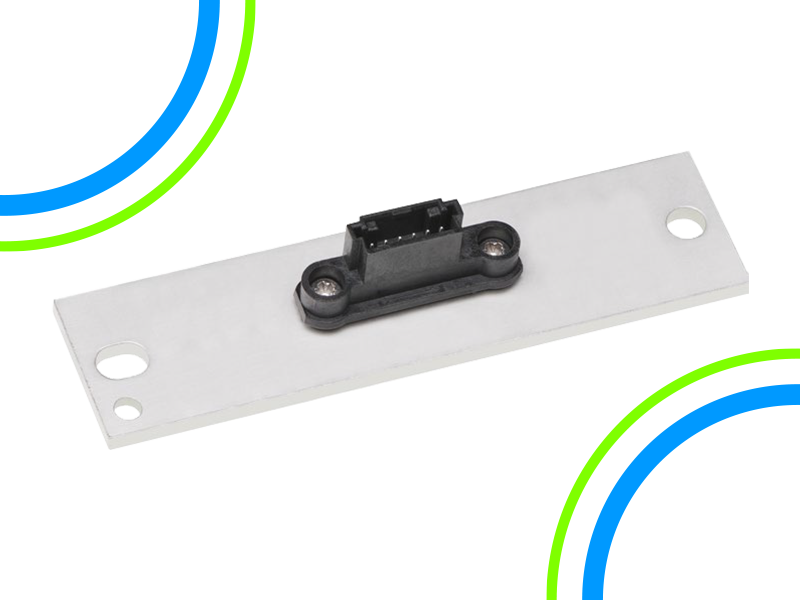
Infineon's coreless sensor leverages Molex Percept Current Sensors leverage Infineon's coreless Hall current sensors with proprietary electronics packaging technology, setting new standards for current-sensing accuracy, reliability and integration simplicity. The sensors are engineered for power levels beginning at hundreds of amps.

Four arrows from different sides coming together

Space & weight savings

86% lighter and half the size of competitors

Three arrows pressing down on a spring

Easy integration and flexible fit

Pre-mounted, pre-calibrated sensors with built-in DuraClik connector; adapts to various busbar widths and thicknesses

An arrow hitting the bullseye of a target

High accuracy

±2% accuracy with minimal temperature variation

RF tower emitting signal waves

EMI resilience

Designed to withstand electromagnetic interference

Water drop

Sustainability

Process uses 99% less water and no chemicals to make a PCB

Thermometer

Wide temperature range

Operates from -40 to +125°C (AEC-Q100 Grade 1)